Saturday, September 21, 2024

Keeping and 486 and Pentium PCs going - A few Repairs and Mods

I grew up with PCs. My first one was a 486DX-33Mhz with 4Mb of RAM (I still have the order sheet somewhere) which was an ok machine at that time (1994). I had a lot of fun with that machine, it served me well for almost 2 years, when it got replaced by a much more powerful Pentium 100MHz with 16Mb of RAM, which was later paired with a Sound Blaster AWE 32 with 2Mb or RAM!

Here is a shot of my first PC Tower (extra points if you guess the game on the screen):

My very first 486 PC on display - circa 1994

Sunday, September 3, 2023

Technics Cassette Deck RS-BX828 Maintenance and Mod

The RS-BX828 cassette deck from Technics is a high-end model released in the early 90's. It features 3 Heads, Direct Drive mechanism and 3 DC motors being 1 quartz direct-drive motor for the reel, one for the capstan and one motor for opening and closing the cassette compartment.

Such robust motor construction allows for a very small wow and flutter of just 0.03%. 

The Technics RS-BX828

Monday, February 20, 2023

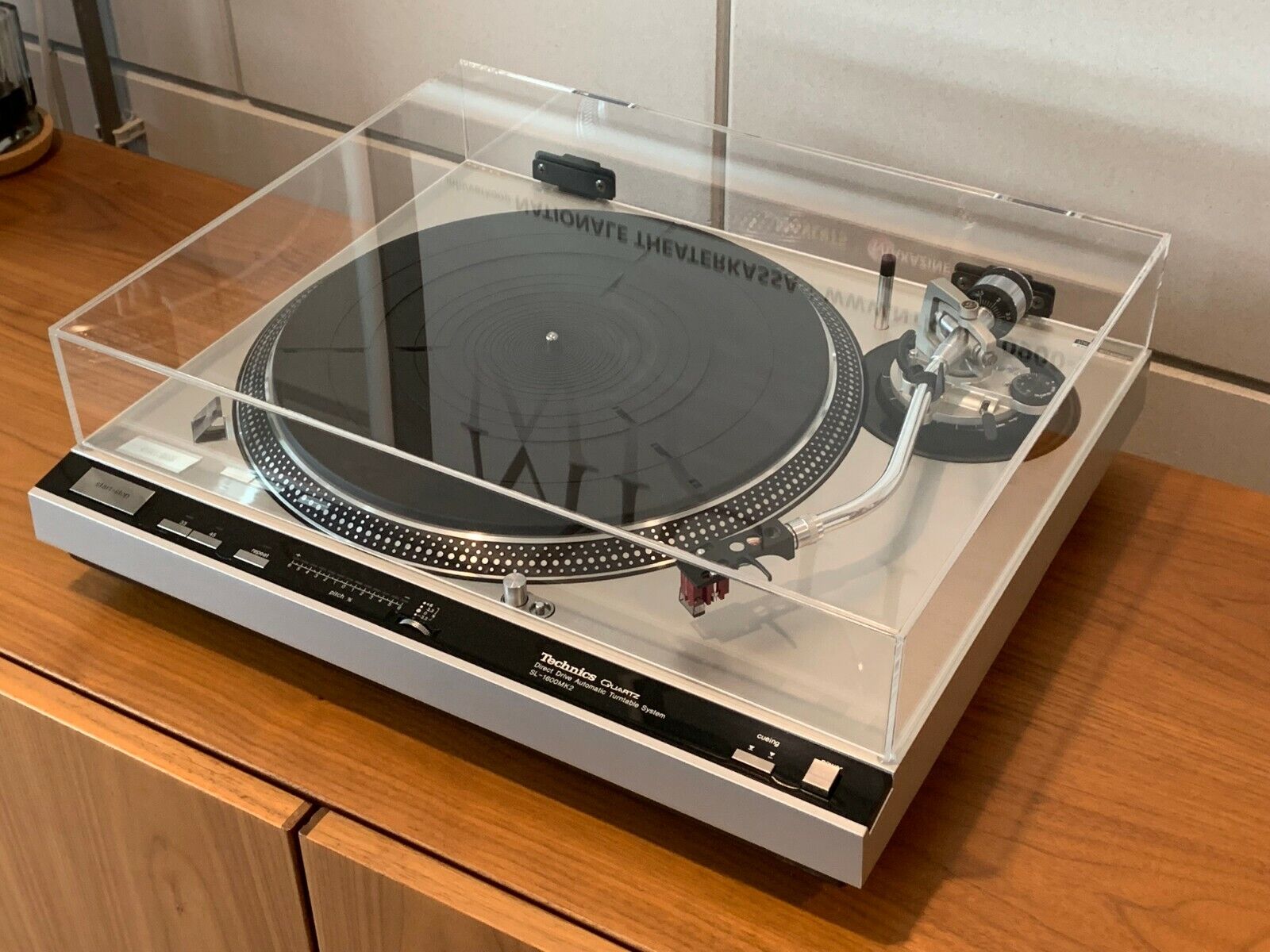
Repairing a "mute" Technics SL-1600MK2 turntable

 The Technics SL-1600MK2 is basically an older brother of the famous SL-1200MK2. It has an identical heavy platter and a similar overall body weight. On top of the robustness and features of its younger and famous sibling, it has the benefit (to some, a downside) of an auto-return, soft touch buttons for cueing.

A nice shot of a SL-1600MK2

Unlike its popular cousin, the SL-1600 series were only manufactured from 1977 to 1981, meaning all models you may be lucky to find on the market are over 40 years old. Adding to the fact that this model has a more complex circuit board, tone arm and cuing mechanisms, proper maintenance is a must to keep this turntable spinning!

Monday, January 10, 2022

The fun (and never ending) 3D printer upgrades and mods

First of all, Happy 2022 everyone!


It has been a long time since my last post, to compensate this will be a long and detailed post about the 3D printer upgrades I installed in the last 18 months. 

Before acquiring my 3D printer back in mid-2020, I researched through several articles and reviews for a while. I was looking for a competent, relatively reliable entry-level FDM/FFM printer with future upgrade potential that would not break the bank (after all, my printer would not be used often, just as a hobby really). 

Although there are options of 3D printers the come completely assembled, I was not afraid to opt for a DIY model, where some initial assembly is needed. I ended up narrowing my search down to the Chinese brand Creality and ultimately to their Ender 3 v2 model. 

My heavily modded Ender 3v2

Monday, March 8, 2021

Repairing the king! Bringing a Sony D-Z555 back to life and giving it a new rechargeable battery

Like many others that grew up in the 80s/90s, you probably have fond memories of going to school listening to your Sony Walkman or later on their Discman. Among the many models of portables that Sony made over the years, a few top of the line models remain in the minds of collectors and audiophiles alike as the best sounding portables ever made. Walkmans like the WM-DD9, WM-DD100, WM-DC2 with the king in terms of sound being the (semi-portable) WM-DC6 - which reigns as one of the best portable cassette players ever made.

On the realm of digital music, Sony had their Discman series. This line has a few players that commonly make the top of the list of the best players ever made are the D-Z555 (also called D555), D10/D100, D35, D303 and D350. More often than not, the throne of the best Discman ever made goes to the D-Z555 for a combination of features, looks and sound quality.

Note that the best portable disc players were made in the early 90s and below, when it was considered a luxury item made for audiophiles. When the Discman became more main stream, some features were added such as ESP (Electronic Shock Protection) or later MP3 discs playback, but with these new "features" it came price cuts and the end of their high-end units.  

The Sony D-Z555 was released in 1989 and it features not one but two (!) backlit LCDs displays, one of the displays spotting a spectrum analyzer (how cool is that for a portable!?). Inside the unit, you will find two audiophile-grade PCM66P DACs and for the very first time on a portable and consumer device: 8 times oversampling and a DSP chip. The player also spot a digital optical output (which was a very new technology in 1990, especially on a portable unit!), a remote port (for an optional IR remote) and line out. 


The Sony D-Z555 (or D-555) and it's 2 backlit LCD displays in action
PS: testing it with a great game soundtrack from the time the D-Z555 was released (1990)!

Monday, February 15, 2021

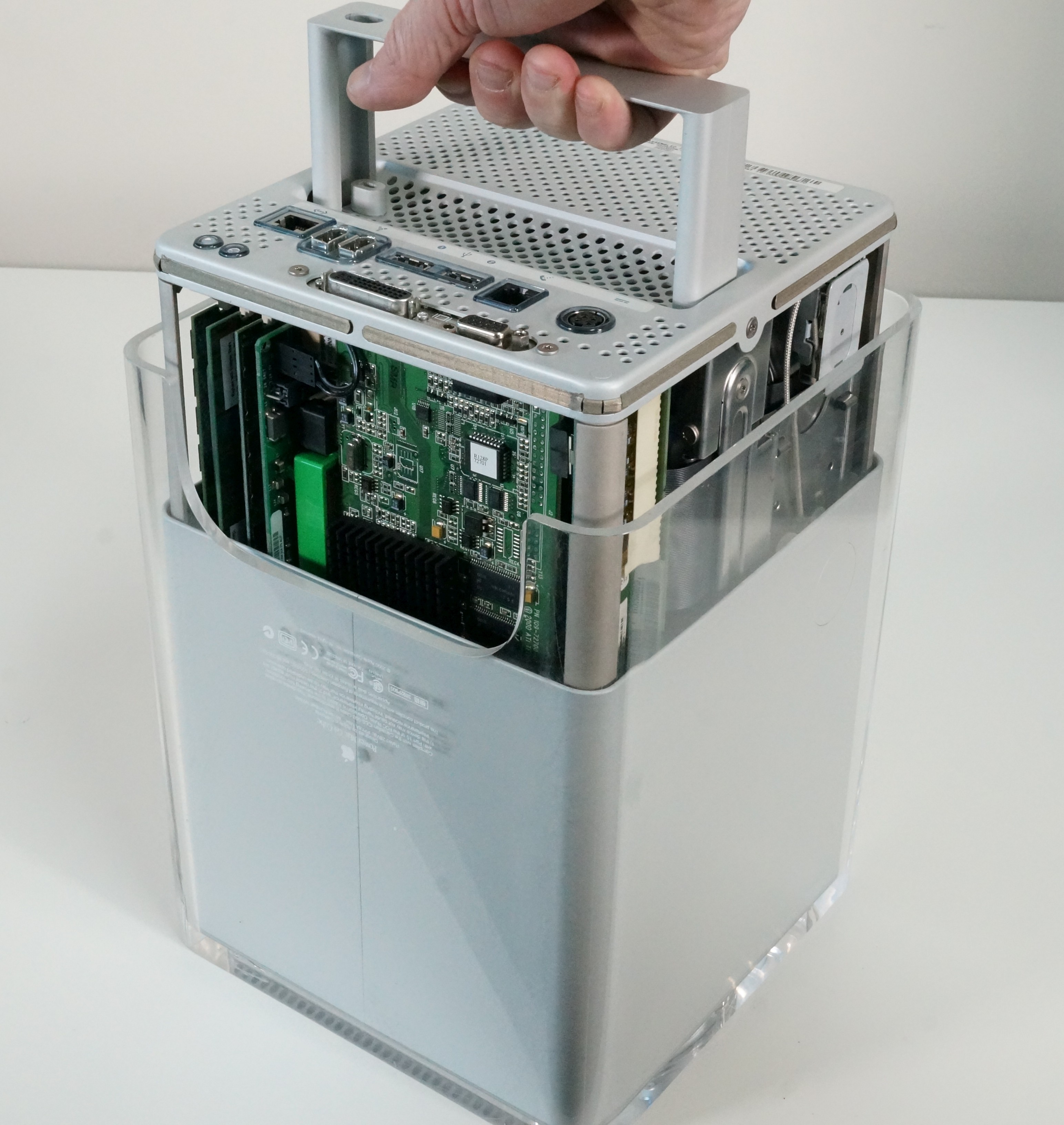
Power Mac G4 Cube - Power Supply replacement


The Power Mac G4 Cube is a very unique Apple computer, with its special and compact desktop (for the time at least) "cube" form factor. It features  easy access to its internal components for (some) upgrades, but mostly, this accessibility is used to show off to your friends and family. 
Unfortunately, it ended up being a commercial failure due to lack of specific market focus and higher price compared to other Apple products of its time with similar or higher specs. Thus, it had a very short life span, being produced only between July 2000 and July 2001 what today lead to a somewhat rare and collectible Mac.


The Cube, like most Apple products, is a solid machine and if you are lucky enough to find a reasonably priced one, most units tend to be working to this day. Among the non-working ones available, chances are that it's because of its power supply (PSU) being dead. Sadly, the Cube PSU is custom made for the Cube, using a proprietary connector cable - making it very rare / expensive to find a plug and play replacement. 

Thankfully, you are lucky enough to come across this article! :)


Thursday, January 7, 2021

The wonders of 3D Printing

This has been a long overdue post on how useful having access to a 3D printer can be. I have one for the past few months and I am still learning new functions in the program slicer and I am very rusty in terms of CAD design software. Throughout my career, I learned a little bit of AutoCAD but I never really used, so most of it I had forgotten. Thus, having a 3D printer gave me an opportunity to re-learn CAD and of course, learn about the intricacies of preparing a 3D model to be put into our physical world.
I am not going to go much in depth as this post is not a tutorial on how to design and 3D print parts. There is simply too much to cover and much better resources out there. To illustrate the "wonders of 3D printing", I will focus on a simple, yet useful feature of 3D printing: DIY repairs. 


My printer is the Creality Ender 3 v2, that despite being a budget, is a very competent printer, especially for beginners.  


My 3D printer setup with some customized (printed) mods

Wednesday, January 6, 2021

Restoring a Macintosh Color Classic

The Macintosh Color Classic is a very collectable Classic Macintosh. It is relatively rare as it was only manufactured for a little over 2 years and is the only classic Macintosh that comes with a Sony 
Color 10" CRT monitor as opposed to the standard 9" B&W CRT display present in all other Compact Macs.


Macintosh Color Classic running System 7.5.5


Tuesday, December 8, 2020

Recapping a Macintosh SE/30 and a IIsi logic boards and the IIsi power supply

Many vintage (15+ years) electronic boards (PCBs) are at a higher risk of having its non-solid electrolytic capacitors leaking by now. Such leaking occurs regardless of whether the component is actually being used/energized (although storage conditions may further contribute to the component degradation). The leakage happens due to natural aging of the component sealing and/or internal corrosion within the capacitor. The consequence of such leakages can be catastrophic not only for the capacitor itself, but for the electronic board as a whole. Here is why...

The most commonly used capacitor (aka caps) in computer logic boards and power supplies are the non-solid electrolytic capacitors, which use a liquid or gel as electrolyte. The problem is that the electrolyte liquid/gel used in these caps are conductive and corrosive and both these characteristics do not go well if spilled over your PCB. Therefore, when these capacitors leak, they can cause:

1) The PCB to malfunction by creating electric contact (short circuits) between components that were intended to be connected. Depending on the short circuits created by the conductive liquid, it could completely burn components and even create holes in the PCB, potentially damaging the board beyond repair. 

2) In addition to shortening components, the corrosive nature of the electrolyte will (with time) corrode the copper traces on the PCB as well as the components terminals to a certain extent. The electrolyte will also cover the solder joints creating a crusty layer that shields the solder joint from heat, requiring you to add more heat to be able to remove components (by desoldering).


Macintosh IIsi Power Supply with leaky capacitors

Sunday, October 18, 2020

Exploration into the Retr0bright world...

Hello everyone! I would like to share my experience restoring old computers to its original (or close to) beige/grey colour. 

If you are reading this post, chances are that you know what retrobright (or retr0bright) is. In any case, here is a short explanation: ABS plastics were largely  used in computers and game consoles in the 80s, 90s and early 2000s. Plastic manufacturers mixed bromine within the ABS formula to give these plastics fire retardant properties. With time, these ABS plastics turn yellow due to a chemical reaction between the bromine and UV light (radiated plenty by the Sun and also fluorescent lights among other sources).

The state of my vintage Apple keyboard prior to the process


Sunday, October 4, 2020

Rescuing a Macintosh SE

I got this Macintosh SE SuperDrive (or FDHD) as part of a complete package, with keyboard, mouse, the original Apple manuals (including the stickers), an Apple StyleWritter II printer, a 1200 bps modem and even some early 90s software. 


The seller tried to power it on and sent me this photo of what he got on the screen: 

Strange wavy pattern with a faint checkered board in the back


I researched for such pattern to get hints on what could be going on and heard it could be: 

Sunday, August 30, 2020

My first Macintosh SE/30!

The Macintosh SE/30 is considered by many the holy grail of the Classic Macs. It is the fastest and most expandable of the classics 9" B&W form factor Macintoshes. It can accept up to a whopping 128Mb of RAM (!!!), what is impressive for a machine that was released back in Jan/1989.

Sunday, August 9, 2020

Rebuilding an iBook G3 Clamshell battery

As the Clamshell and retro laptops in general get older, it gets harder and harder to find batteries for them. That's understandable as the demand is also negligible and most older laptops end up on a landfill or at a electronics recycling facility unfortunately. Luckily for us, retro computer enthusiasts and collectors alike, it is possible to rebuild some older laptop batteries with standard new cell you can still buy today.

The iBook G3 Clamshell is a classic Apple laptop from the late 90s and early 2000s (it was sold from 1999 to 2001 to exact). It has the now "iconic" colour shell that matched the iMac G3 CRTs of that era. For their unique design and relatively low duration run (it had less than a 2 years run), it is also getting harder to find and thus its price has increased. 

More details about the iBook G3: https://en.wikipedia.org/wiki/IBook

An indigo iBook G3 clamshell and it's unique holder 

Sunday, August 2, 2020

Pixlas power supply mod on a Mac Pro 4,1/5,1

Once again, let's talk about a very important mod/upgrade you can do to your classic Mac Pro (cMP): the Pixlas mod. The Pixlas mod will allow you to install a more power GPU into the Mac Pro that it was designed for, by drawing more current directly from the power supply of the cMP as opposed to using power connectors available on the motherboard. 


If you try to install a powerful GPU

Before proceeding, some key links you should read before jumping in:

- The House of Moth - Pixlas Mod tutorial (excellent and detailed instructions provided by Jay)
- MacProUpgrade facebook community


Sunday, July 26, 2020

Adding a new Bluetooth 4.2 and AC Wifi card to a cMP (Mac Pro 4,1/5,1)

My cMP 5,1 (2012) now has AC WiFi, BT 4.2, Handoff, Continuity, AirDrop and Apple Watch unlock all working after terminal command activation. Thanks to support and hints found in the MacProUpgrade community on facebook.


Sunday, July 19, 2020

Pentax K70 DSLR (K50/K30) - Dark photos fix - Solenoid replacement

Unfortunately, due to a failed cost savings attempt on Pentax' side the solenoid manufacturer Shinmei moving its production from Japan to China, a different (cheaper?) aperture solenoid was used on their K30, K50 and later a slightly? improved version on the K70 model cameras. 
There are basically 2 versions of the now famous culprit solenoid used in the Pentax K series: the most recent has a plastic (PET) body of green color and it is made in China. The former/older solenoid used in their older cameras such as the K10, K20, K100 uses a higher quality white teflon (PTFE) body solenoid that was made in Japan.


Sunday, July 12, 2020

Keeping the Technics SA-GX910 (or SA-GX710) running cool - Fan mod with speed control

In today's post, I would like to share a mod that I just did to my old-time favourite Technics receiver: the Technics SA-GX910. Before going into deeper into this mod, here is a little history on these receivers and why they are (still) one of my favourite receiver. 


THE TECHNICS SA-GX SERIES FROM EARLY 90s

This receiver is a top-of-the-line from Technics from the early 90's (1991 to be exact). Many agree that is not only a great sounding receiver, but also a great looking one. With it's graphic equalizer and many MANY buttons, you can fully customize the sound to your liking without the need of going in out of menus like in today's received. Plus, you can monitor all the settings in the gorgeous VFG display. 

The lower end model SA-GX505 (also a great sounding receiver!)

Sunday, July 5, 2020

Adding voice to the original DOS versions of Monkey Island 1 and 2

Hello everyone! 


Being a big fan of the LucasFilm (then LucasArts) point and click games from the late 80s / early 90s, I wanted to try playing these games in one of my vintage computers.

I recently installed the latest PowerPC version (v2.1.2) of ScummVM on my PowerBook G4 12" and it ran great! It was fun to re-visit a few LucasArts games of my childhood running well on the vintage, small form factor, and sturdy aluminum Apple laptop from 2004. I feel the trackpad in this PowerBook is very responsive and a perfect fit for a point-and-click adventure game.

I've played a bit of Indiana Jones and The Last Crusade (The Graphic Adventure), of course I wanted to try the the Special Editions released in 2009 and 2010 of Monkey Island 1 and 2. I needed to try the original DOS versions of The Secret of Monkey Island and Monkey Island 2: Le Chuck's Revenge to see them running on the PowerPC / MacOS.